Image The demo works. The feature does exactly what the slide said it would. Someone says "nice." A couple of people do the little typing-clap in the chat. "Any questions?" A pause, the good kind, the kind that means we're done. "Great, thanks everyone." And the review is over. Notice what didn't happen.
Image The demo works. The feature does exactly what the slide said it would. Someone says "nice." A couple of people do the little typing-clap in the chat. "Any questions?" A pause, the good kind, the kind that means we're done. "Great, thanks everyone." And the review is over. Notice what didn't happen.
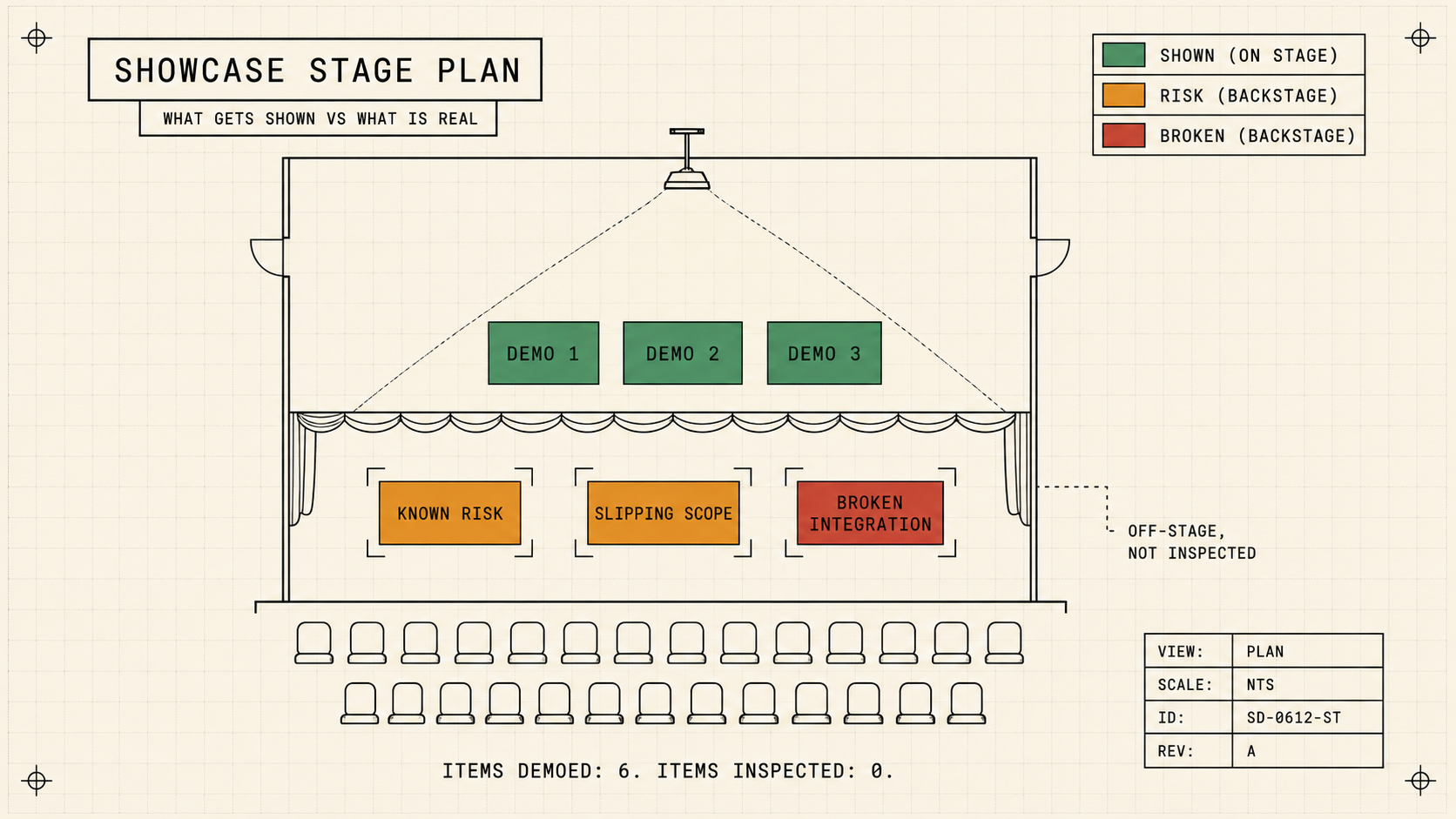
Notice what didn't happen. Nobody looked at the thing that's three weeks behind. Nobody mentioned the integration that's holding together with tape. The risk everyone's privately worried about didn't come up, because this wasn't the room for it. Something was shown. Nothing was inspected.
That's the quiet swap at the heart of most reviews. Showing replaced inspecting, and nobody noticed, because showing feels productive and looks like progress. You leave the meeting a little reassured, which is exactly the problem: the meeting that's supposed to surface the real state of the work has become the meeting most engineered to hide it.
Here's the distinction the calendar invite blurs. Showing is presenting the parts you chose, in the light you chose, to people you'd rather impress than alarm. Inspecting is holding the whole thing up to the light, including the parts you'd never put on screen, and asking what's actually true.
A review that only shows the wins is a highlight reel. It's the most watchable meeting of the Sprint and the least honest one.
And this isn't a Scrum problem. Call it a Sprint Review, a demo, a showcase, a stage-gate, a monthly steering update. Every way of working has a moment where the team is meant to look squarely at the real state of the work. The name changes. The theatre is the same.
In context
- Topic: Proyectos, PMO y Riesgos — Gestión de proyectos, oficinas de proyecto y riesgo del portafolio.
- Source: Scrum.org
- Published: 13/10/2026
Continue reading at the original source →
Excerpt published automatically by the site radar. The full text belongs to its publisher and is linked above.
Por qué importa
En gestión de proyectos casi todo lo que se discute como problema técnico es en realidad un problema de expectativas mal negociadas al principio. Alcance, plazo y costo se pactaron en un momento en que nadie tenía la información suficiente, y después nadie quiso reabrir la conversación.
Mi filtro es la calidad del reporte de estado. Si todos los proyectos están en verde, el sistema de información no sirve: en cualquier portafolio real hay iniciativas en problemas, y una organización sana las muestra a tiempo en vez de descubrirlas en el comité de cierre.
Lo que suele salir mal
El error clásico es tratar la gestión de riesgos como un entregable de la fase de planificación. Se arma la matriz, se aprueba, se archiva. Nadie la vuelve a abrir hasta el cierre, cuando sirve para documentar que el riesgo estaba previsto — que es exactamente lo contrario de gestionarlo.
Qué mirar
- Cómo se estimó y qué tan cerca estuvieron las estimaciones anteriores de la misma organización.
- Quién es el patrocinador y con qué frecuencia real aparece — no en el organigrama, en la agenda.
- Si el reporte de estado muestra proyectos en rojo: un portafolio todo en verde es un portafolio sin información.
Cómo leo esta entrada
Si esto llegara a mi mesa, lo primero que pediría no es el avance porcentual: es la lista de decisiones pendientes con nombre y fecha. El porcentaje se puede maquillar; una decisión trabada hace tres semanas con un responsable identificado no se puede discutir, y explica el atraso mucho mejor.
La noticia original está publicada en otro idioma; acá se cita el extracto tal como lo entrega el medio y el comentario se escribe en español.
Comentarios
Todavía no hay comentarios. El primero puede ser el tuyo.
¿Lo estás viviendo en tu equipo?
Abrí el chat y contame cómo lo están manejando. Me interesa comparar notas.