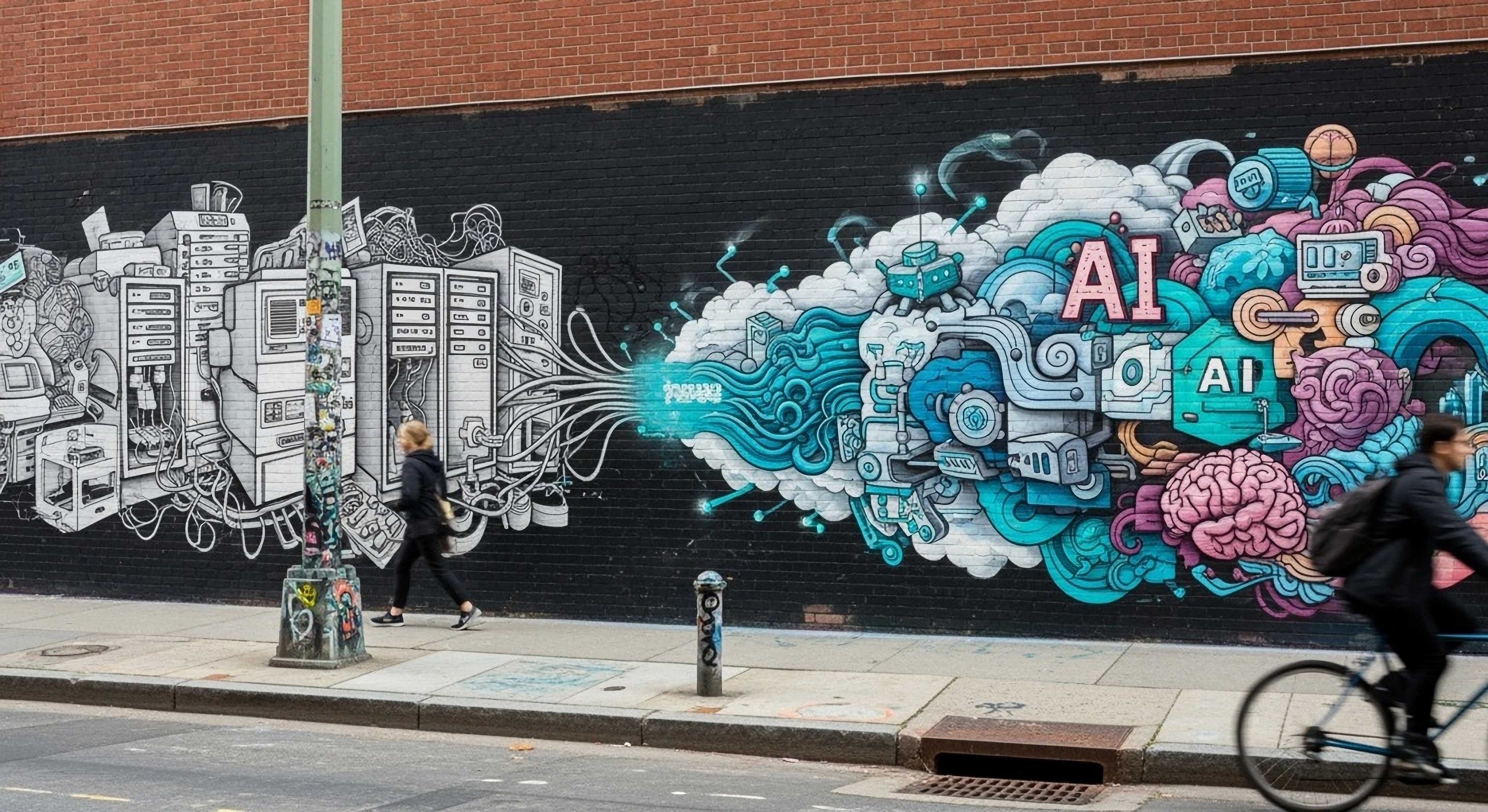

Stripe recently acquired AI routing platform OpenRouter for a reported $7.5 billion, making it one of the largest venture-backed AI startup exits and fintech M&A deals of the year. It’s a blockbuster deal that instantly became one of the most intriguing tech developments to occur this year.
Stripe recently acquired AI routing platform OpenRouter for a reported $7.5 billion, making it one of the largest venture-backed AI startup exits and fintech M&A deals of the year. It’s a blockbuster deal that instantly became one of the most intriguing tech developments to occur this year.
The broader perception seems to be that this is just a standard software developer tooling narrative. Financial analysts and tech enthusiasts would have you believe the main takeaways here are the massive acquisition price and Stripe’s shiny new resource to lower AI token costs. To many, OpenRouter is simply a tech-savvy developer utility that routes basic prompts to inexpensive AI models while setting aside pricey frontier models for complicated reasoning tasks. Others view it as a way to prevent vendor lock-in from cloud ecosystem giants such as AWS Bedrock. But these perspectives are missing the big picture.
From my perspective, it’s clear that this acquisition sends a definitive signal about where the future of digital payments is heading – not just the future of artificial intelligence software. While it won’t happen overnight, agent-to-agent commerce is clearly opening the floodgates to a paradigm where autonomous software agents will serve as fully empowered economic participants that can conduct business on behalf of both individuals and enterprises.
In my line of work, that means we aren’t far away from the time when, for example, an automated car insurance agent can eventually meet, negotiate with, evaluate risk for and sell coverage to another company’s autonomous agent – with the entire exchange happening seamlessly behind the scenes.
Consider how AI agents operate nowadays versus how they will perform in the near future. Today, agents primarily pass context back and forth across software interfaces. Case in point: A consumer uses a car shopping agent to search vehicle inventory for a new Toyota RAV4; after the consumer chooses the exact vehicle they want, the agent passes the pertinent details – make, model, buyer location and other criteria – to an insurance-quoting agent. In this model, data flows fluidly. Yet the software systems themselves complete no actual financial transaction. The agents aid the user, but human intervention via a checkout process, credit card entry or manual sign-off is needed to finalize the vehicle purchase.
In context
- Topic: Banca y Fintech — Banca digital, pagos, open banking y regulación financiera.
- Source: CIO
- Published: 16/10/2026
Continue reading at the original source →
Excerpt published automatically by the site radar. The full text belongs to its publisher and is linked above.
Why it matters
In payments, innovation always runs one step ahead of regulation and two steps ahead of the systems that have to support it. That gap is where the business is decided: whoever closes it without breaking compliance takes the market.
I read these stories with two questions on top: what happens to cost per transaction and what happens to risk. If cost drops but risk rises without anybody measuring it, the saving is borrowed and gets repaid with interest on the day of the first incident.
What usually goes wrong
What I see fail most is underestimated compliance load. The product gets designed around the customer and legal comes in late, once it is already built. That is when requirements appear that force whole flows to be redone, and what was going to ship in one quarter ships in three.
What to watch
- Which part of the customer relationship ends up with a third party and whether that is reversible.
- What happens to cost per transaction at real volume, which is where the business is decided.
- How daily reconciliation is left, which is where the cases nobody modelled show up.
How I read this entry
If this came into an institution, I would look at reconciliation first. Everything new in payments looks fine until the day has to balance, and that is when the cases nobody modelled appear: reversals, duplicates, half-completed transactions. That boring work decides whether the product is sustainable.
This entry is an excerpt from the original source, selected by the site radar. The commentary above is the site's own and does not belong to the cited publisher.
Comments
No comments yet. Yours can be the first.
Living through this in your own team?
Open the chat and tell me how you're handling it. I'm interested in comparing notes.